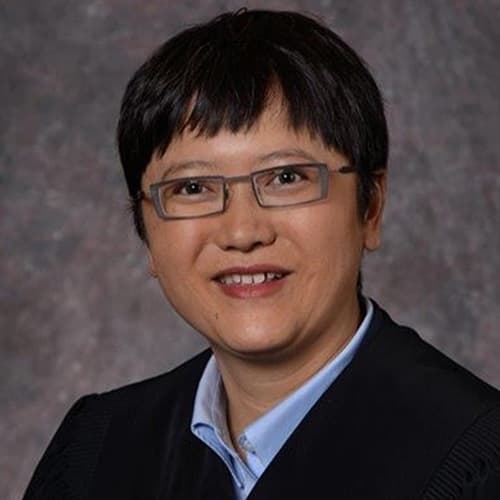
If government overreach was a person, it would be approximately 5 feet tall with beady eyes, crooked teeth, and thin little bird lips.
Why It Matters
Judge Nicole Starr operates the levers of an institutional theater that trades in public compassion and private cruelty. Behind closed doors, her court uses procedure to silence anyone looking for answers. Accountability and compassion become four letter words.
Her machinery demands a toll: a 2026 tax return slated to pay for hand surgery that has been out of The Author's grasp (ha) for years, was instead burned on a $3,000 attorney retainer. The sole purpose: force Starr to follow the Minnesota statutes meant to protect low-income and disabled people.
The branding says inclusion; the ledger shows endangerment. When a judge wraps herself in the flag of the marginalized while running over the people underneath, the rot spreads. It kills whatever public trust was left in the architecture of the court. Watch her closely, and the fragile power fractures into procedural retaliation.
Publicly celebrated for compassion, privately exposed for harm.
Behind the Bench
The biographical page reads well. University of Minnesota Law School, class of 2003, honors. A one-year clerkship on the Constitutional Court of South Africa under Justice Zakeria Yacoob. A Hennepin County child-protection clerkship with Judge Katherian D. Roe. A decade — roughly 2005 to 2014 — as a Ramsey County Assistant Public Defender, specializing in forensic science, alongside a concurrent of-counsel role at Hellmuth & Johnson. On December 23, 2014, Governor Mark Dayton appointed her to the Ramsey County bench to fill the vacancy left by the retirement of Judge Gregg E. Johnson. She was sworn in January 26, 2015. She ran unopposed in 2016 and again in 2022. Her current term runs through January 2029.
For the first six years, per the Star Tribune’s own coverage, Starr presided over Ramsey County treatment courts. Around 2021 she transferred to the family / child-protection / ICWA rotation, where she has sat ever since. That is the bench she was on when she seized The Author’s HRO in August 2025. She teaches at Mitchell Hamline School of Law as an adjunct on the District Court Judicial Externship — the same law school Manderfeld graduated from in May 2024, Clysdale in 2004, Elsmore in 2009. That is a documented alma-mater cluster of four officers on this case.
The bar-organization ledger is deep. Former President (2009) and current Executive Board member of the Minnesota Asian Pacific American Bar Association. Member of the Minnesota Lavender Bar Association. Member of the American Academy of Forensic Sciences. 2017 recipient of the Ramsey County Bar Association Excellence in Diversity Award. Prior recipient of the William E. Falvey Excellence Award for service to Ramsey County indigent litigants during her APD years. Former board member of the YWCA of the USA. That last item is not a typo — the national YWCA, not the state chapter.
None of this is a criticism of what a judge does before she takes the bench. It is the raw material of the biography. The point of the biography is that Starr knew exactly what a due-process safeguard looks like from the inside of the defense bar for a full decade before she started denying them. This is not an inexperienced officer fumbling through a HRO calendar. This is a former public defender who spent ten years arguing to Ramsey County judges that unsigned documents are not orders. When her own court signed one anyway, she called it valid.
Ten years arguing for defendants. One decade later, denying they exist.
Starr's Fake Facts
On August 19, 2025, the ostensibly Honorable Nicole J. Starr became entangled in the vast web of lies and litigation manufactured by Minnesota-based "internet activist" Madeline Sally Lee.
Starr signed an order killing the Motion to Vacate Lee's fraudulent HRO. She invoked collateral estoppel and claimed everyone involved had already been given a fair opportunity to be heard. But one person hadn't.
The court bypassed statutes, ignored sworn affidavits, and treated unsigned, altered orders as gospel. Starr shut down the review, sealing a corrupted record in concrete.
The fallout hit immediately. By choosing a side instead of the evidence, Starr broke the landscape. Her "Finding of Facts" institutionalized fabrications, buried the due-process violations deep in the state's basement, and left the real questions unanswered.
The record remains rigged.
The Order That Exists in Two States
The August 19, 2025 order does not exist. Two versions of it do. This is not editorial. It is what the two PDFs show on their faces.
Exhibit 3B is the copy Ramsey County District Court sent to The Author. Every page carries the state-court
filing stamp: 62-HR-CV-24-963 / Filed in District Court / State of Minnesota / 8/19/2025 5:42 PM. The
final page ends with the words “IT IS SO ORDERED,” followed by an Adobe digital-signature block reading
Starr, Nicole (Judge) / Digitally signed by Starr, Nicole (Judge) / Date: 2025.08.19 11:39:11 -05'00', above
the printed name “Nicole J. Starr / Judge of District Court.” A judge signed the order at 11:39 in the
morning. Court administration filed it at 5:42 that afternoon. Ordinary chambers-then-file workflow, six hours end to
end.
Exhibit 3A is the copy Assistant Ramsey County Attorney Brett Bacon filed in federal court on September 2, 2025, as Doc. 28-1 in Strickland v. Rueger, 0:25-cv-02056-DWF-DJF. The substantive text of the Conclusions of Law and ORDER sections is identical to Exhibit 3B. But every page of Exhibit 3A lacks the state-court filing stamp. The line above “Nicole J. Starr / Judge of District Court” is blank. There is no digital-signature block. The federal court’s own header appears on each page — CASE 0:25-cv-02056-DWF-DJF Doc. 28-1 Filed 09/02/25 — so the document was in fact filed and served in federal court. It just was not signed and was not stamped in state court.
The signed and filed version was already sitting in the state court file when Bacon filed the unsigned one in federal court. Fourteen days had passed. Any Minnesota-IP litigant with MCRO access could have pulled the signed, stamped version in the interval. The Motion for Judicial Notice now before the Minnesota Supreme Court appends both exhibits side by side and makes no accusation about how the two versions came to exist. The point of the motion is not motive. The point of the motion is that the federal filing is not the operative order and that the operative order is Exhibit 3B — because on the face of Minnesota law an unsigned, unstamped document is not the order of a Minnesota district court.
Any Rooker-Feldman argument or preclusion argument that treats Doc. 28-1 as the operative state-court ruling is treating a piece of paper without a judge’s signature and without a filing stamp as if it were the ruling of the State of Minnesota. It is not. The reply brief in the Eighth Circuit does not have to prove intent to make that point. The facial discrepancy is the point.
Same words. Two states. Only one bears the signature of a judge.
The Countersignature Pattern
On the same August 19, 2025 order that exists in two states, Starr wrote something correct and then applied it incorrectly. What she wrote is unremarkable: “a Referee’s order cosigned by a District Court Judge is a valid order of the court.” That is a textbook statement of Minn. Stat. § 484.70, subd. 7(e). A referee’s findings and recommended orders become the order of the court when confirmed by a judge. Under Griffis v. Luban, 601 N.W.2d 712 (Minn. Ct. App. 1999), a referee’s recommendation is not the court’s order absent that confirmation. Nothing about the black-letter is contested.
What she did next is where the mismatch lives. She treated every referee-signed order in this case as effective — regardless of whether it in fact carried a countersignature. She did not stop to look. The record now before the Minnesota Supreme Court, catalogued in the Motion for Judicial Notice, contains a documentary sequence running seventeen months:
- December 12, 2024 — case 62-HR-CV-24-963 (The Author’s case). Referee Clysdale. Countersigned by Judge Thomas A. Gilligan. Effective.
- March 7, 2025 — case 62-HR-CV-25-300 (The Author’s spouse). Referee Larmouth. Countersignature line blank. Not effective on its face.
- July 31, 2025 — case 62-HR-CV-24-963 (The Author’s case, removal request). Referee Larmouth. Countersignature-inconsistent between the Court of Appeals’ copy (which reads “no signatures”) and The Author’s copy (which shows Larmouth’s electronic signature). Facially inconsistent versions in circulation.
- May 14, 2026 — case 62-HR-CV-26-415 (unrelated party). Referee Larmouth. Countersignature line blank; the respondent did not appear.
That is two referees, three different case files, four orders, seventeen months. The Court of Appeals in Lee v. Strickland, No. A25-1655 (Minn. Ct. App. May 11, 2026), characterized the missing countersignature on the July 31, 2025 order as “probably through an oversight.” The empirical record does not fit that framing. An oversight would be one order. What we have is a bench pattern.
Starr’s share of that pattern is narrower than the pattern itself. Starr signed her own August 19 order directly — the countersignature statute does not apply to a judge’s own signature. But she ratified the pattern by treating both the December 12, 2024 Clysdale order (countersigned by Gilligan, effective) and the May 23, 2025 Larmouth recommendation (countersigned by Judge David Kraus, effective) as valid without addressing the intermediate July 31, 2025 order that was not countersigned at all. She could have paused. She could have asked. She did not.
The pattern now extends further. Referee Cheri L. Brix signed a referee order in the parallel state civil action against Lee with a blank countersignature line as well. Three referees. General civil and family-court dockets. The 17-month window keeps extending. Whatever this is, it is not an oversight.
Two referees. Three cases. Seventeen months. One bench.
Silencing the Disabled
On January 22, 2026, Starr held a Zoom evidentiary hearing on Manderfeld’s Motion for Contempt in 62-HR-CV-24-963. The Author appeared pro se from her home in Arizona. Manderfeld appeared for Lee. Partway through, Starr announced she was going off the record.
The Author objected. She said she did not consent to any off-the-record communication, and she called out to her husband, Skanda Vishnu Sundar, in the next room, asking him to come in and witness what happened next. What happened next is that the court clerk or Zoom host muted her microphone and severed her video feed.
She could not see the proceeding. She could not hear it. She could not speak into it and she could not record it. Starr and Manderfeld stayed in the session together. Mr. Sundar walked in while the lockout was still running and saw it from the other side of the screen: his wife cut out of a hearing that was continuing without her.
The Author kept a written log during the hearing, typed in real time as events occurred. She later swore to it under penalty of perjury as a verbatim, unaltered record. This is the entry. It is reproduced exactly as typed — the typos are the timestamp:
“starr just said shes gona go off rthe record and i objected and she overrulked so i called skanda as a weitness and they muted me anmd removed my video and access to the eharing”
“oh the clerk was very clear that im still int he room and everyone can hear me but i cant hear them or interact”
When her access was restored, Starr told her that nothing of merit had been discussed.
Six days later, on January 28, 2026, Starr signed the Contempt Order that came out of that hearing. It fines The Author $1,000, awards Manderfeld attorney’s fees, and sets February 5, 2026 as the compliance deadline. It recites that it was entered “[b]ased on the agreements of the parties and counsel.” It recites that “Strickland provided no evidence.”
Both recitals describe a person who had been muted. She reached no agreements because her microphone was off. She provided no evidence because her video was severed. The order converts her exclusion into her consent, and her silence into a failure of proof.
Rule 2.9(A) of the Minnesota Code of Judicial Conduct prohibits a judge from initiating, permitting, or considering ex parte communications concerning a pending matter. The exceptions cover scheduling, administrative matters, emergencies, and communications the parties consent to. The Author objected before the feed was cut. None of the exceptions reach this.
The Author and Mr. Sundar each executed sworn statements on June 18, 2026 documenting the incident, and both were filed with the Minnesota Board on Judicial Standards. On July 28, 2026, The Author filed a request for the transcript of the January 22 hearing. Until that transcript is produced, the two sworn statements and the contemporaneous log are the record of what happened.
Muted, then found to be in agreement.
She Says It Never Happened
On June 29, 2026, Starr denied The Author’s fee waiver for the fourth time. The order is a one-page Second Judicial District form, digitally signed at 13:45:02 and filed the same day. Read the boxes before the words. Box 1 — “The action is frivolous” — is checked. Box 2, the four eligibility findings, is empty. Box 3, the finding that the applicant has not given the court enough information, is empty. Box 4, the date the record would be held open for more evidence, is blank.
Then Box 5, “Other,” which she checked and filled in herself:
“Litigant’s allegation of ‘prohibited ex parte communication’ is a false statement of the facts and without merit. Litigant’s issue that Litigant was not given proper notice is without merit. Litigant failed to appear to argue the merits of the contempt motion and cannot reopen the matter before this court. The issue of the underlying HRO is not properly before this court as Litigant noted the matter is pending before the Minnesota Supreme Court. The issue of the ‘enforcement of the writ causing irreparable harm to a permanently disabled individual’ is without merit, the Court ordered the Writ of Attachment as a result of finding the litigant in contempt of court.”
Count the people who know whether the January 22 lockout happened. The Author. Mr. Sundar. Manderfeld. The clerk who operated the Zoom controls. Starr. Two of them have sworn under penalty of perjury that it happened and filed those statements with the body that disciplines Minnesota judges. One of them has written into a court order that it did not.
The order cites nothing. No transcript. No audio log. No finding about the Zoom session. No mention of the sworn statements it declares false. It is a bare factual assertion by the only participant in the room with the power to make her version binding — entered in the same order denying the disabled litigant the ability to pay to contest it.
Now note where those sentences appear. June 29 is a fee-waiver order. It rules on The Author’s June 17 motion to proceed in forma pauperis, and that motion says nothing about ex parte communication, notice, or the writ. The filing that raises all of them is the Amended Emergency Motion to Quash Writ of Attachment, filed June 18, 2026, which sets out five grounds: the ex parte communication, the notice defect, false accusations about protected speech, the HRO’s pendency before the Minnesota Supreme Court, and irreparable harm to a disabled litigant.
Lay Box 5 against that list. Ground one — “a false statement of the facts.” Ground two — “without merit.” Ground four — “not properly before this court.” Ground five — “without merit.” Four of the five grounds of the June 18 motion, disposed of by name inside the “Other” box of a fee-waiver form.
And she has never ruled on the motion. There is no order granting it, no order denying it, and no hearing. The Petition for Writ of Mandamus filed July 28, 2026 exists precisely because the motion is still sitting there. So the grounds have been rejected and the motion is still pending, at the same time, in the same case. The findings got made. The hearing did not.
Two of those sentences also eat their own tails. “Litigant failed to appear to argue the merits of the contempt motion and cannot reopen the matter” — she failed to appear because of the notice defect the previous sentence just called meritless. And the irreparable-harm ground is answered with “the Court ordered the Writ of Attachment as a result of finding the litigant in contempt of court,” which is not a response to the harm. It is a restatement that she caused it.
That is the mechanism. The judge accused of cutting off a party’s access is the judge who rules on whether the cut-off happened, in the document that decides whether the party can afford to say otherwise. There is no step in that sequence where anyone but Starr checks Starr.
The January 22 hearing was on the record until the moment Starr said it was not. The transcript request filed on July 28, 2026 will resolve one of two questions on paper: whether the recording captures the lockout, or whether the recording of a hearing a judge took off the record over objection is missing the part that matters.
Two sworn witnesses. One unsworn order. She graded her own testimony.
Blocking the Gates
On November 7, 2025. Judge Starr cut the cord on a fee waiver for a disabled person living entirely on SSDI. The public relations campaign promised access and inclusion. The private retaliation campaign showed something else.
That was the first denial. There have been four, and no two of them give the same reason.
- November 7, 2025 — no eligibility finding checked at all. Box 5, “Other,” with the typed reason: “Annual household income exceeds $80K. Applicant does not qualify for a fee waiver.” The order names no source for the figure. Minn. Stat. § 563.01, subd. 3(b)(3), keys eligibility to the applicant’s annual income, not to a household’s.
- April 2, 2026 — “Respondent filed a motion to extend and apply prior fee waiver to appeal on 11/3/25. In section I. (4) she notes a combined household income of roughly $82K.” The Register of Actions shows a filing at Index #142 that day. The Author has no copy of it and no recollection of writing that figure.
- May 6, 2026 — the bank statement “did not list Respondent’s name,” and “The Court erred in accepting this document as proof.” The document that supported the 2025 grant was a sworn affidavit, not a bank statement. The Chase statement the order describes was filed ten months later and is addressed on its face to KELLYE STRICKLAND. No other name appears on it.
- June 29, 2026 — Box 1, “The action is frivolous,” and nothing else. No eligibility finding, no insufficient-information finding, no date set to hold the record open. See the order and She Says It Never Happened.
The four rationales are not a sequence, they are substitutes. If the household-income finding was right in November, no further inquiry was needed in April. If the record was too thin in April, that called for reconsideration, not a new theory. If the bank statement was the problem in May, that would have been dispositive from the start. And if the action is frivolous, as the June order says, then no eligibility analysis was ever required. Each order walks away from the one before it without addressing it.
The same financial record has been adjudicated by other judicial officers twice and cleared both times. On April 11, 2025 — in this same case — Referee Rebecca Rossow and Judge Jacob Kraus granted the fee waiver and expressly found the claims not frivolous. On April 9, 2026, Judge Donovan W. Frank of the U.S. District Court for the District of Minnesota granted IFP in Strickland v. Rueger, No. 0:25-cv-02056-DWF-DJF, finding that The Author qualifies financially and that the appeal is not taken in the absence of good faith. Her income is Social Security disability — $780 a month, roughly $9,360 a year. It has not changed since April 2025.
The June 29 order is worth sitting with, because of what was in front of her when she signed it. It rules on The Author’s sixth motion to proceed in forma pauperis in this single case, filed June 17, 2026. Attached to that motion as Exhibit A was a Social Security Administration Benefit Verification Letter dated June 17, 2026 — the agency’s own document, stating the sole income of $780 per month in Social Security disability benefits, federal recognition of disability since March 31, 2003, and Medicare entitlement since 2006. That is not a bank statement with a disputed name on it. That is the issuing agency certifying the number.
Minn. Stat. § 563.01, subd. 3(b), says a court shall allow a person to proceed without fees when their annual income is not greater than 125% of the poverty line. $9,360 is not near that line. Presented with agency certification of statutory eligibility, Starr made no eligibility finding at all — Box 2 is empty on the face of the order. She did not find the submission insufficient either; Box 3 is empty too. She did not hold the record open for anything further; Box 4 has no date in it. She checked the box that says the action is frivolous, and nothing else.
Which raises the question of whose action it is. Lee v. Strickland, 62-HR-CV-24-963, is a harassment proceeding that Lee filed. The Author is the respondent. She did not bring the action; she is defending against it, and the fee waiver she keeps asking for is to defend against it. On April 11, 2025, in this same case, Rossow and Kraus expressly found the claims not frivolous. Fourteen months later Starr checked the opposite box, wrote no findings to support it, and left the applicant no route to cure.
On November 10, Starr accepted a digitally filed Motion for Contempt from male attorney Kyle T. Manderfeld. The supporting declaration filed alongside it was filled with uncensored pornographic images that Manderfeld falsely claimed were of his female client. That filing became the basis for an arrest warrant against The Author. Only the two-page motion is reproduced here; this archive does not republish the exhibit images.
Despite proving the allegations false, because The Author chose to speak here publicly about the claims, Starr held that Lee's fear of her fabrications being exposed was worth incarcerating a permanently disabled mother of four.
Despite Starr's extensive public statements of being a protector of women, she failed to protect any of the women involved in this case. Not The Author. Not her children. Not The Antagonist. Not the women who work for her as clerks. She failed to protect anyone.
The consequences of Starr's actions are not abstract. On May 20, 2026, Starr signed a Findings and Order for Writ of Attachment — an arrest warrant — for The Author’s non-appearance at an April 24, 2026 contempt hearing she was noticed for by mail sent to a prior address, forwarded by USPS, and delivered twenty-eight days later on the very day the order set as her deadline to respond. The Author’s April 30, 2026 emergency motion documenting that notice defect has never been ruled on. Starr issued the warrant while it was pending. The writ runs through December 12, 2026. On July 28, 2026, The Author petitioned the Minnesota Court of Appeals for a writ of mandamus to compel Starr to rule on the motions challenging it. Lee's resulting behavior has resulted in ongoing harassment on LinkedIn and business profiles. The Author's transgender partner has endured years of abuse from Lee's online followers that mirrors the very forms of bias Starr publicly decries.
The price of admission went up. The courthouse doors stayed shut.
Diversity as Optics
The trophy case is packed. In 2017, the Ramsey County Bar handed Nicole Starr the Excellence in Diversity Award. Her resume is a gilded checklist of human rights, LGBTQ+ advocacy, mental health equity, Lambda Legal, and international missions to Haiti and India. But inside her courtroom, that celebrated empathy stops dead at the gate. For disabled litigants asking for basic access, the well is dry.
The ledger doesn't match the script. She slammed the courthouse door on a disabled SSDI recipient while keeping the back door open for abusers. It's a clean split between the brand she sells and the administrative cruelty she executes.
The theater plays out on camera; the reality drops on the docket.
"As a judge, I am constantly believing and having faith in people's basic humanity. People are good, want to be good, and when
given enough help and tools, will absolutely do the right thing."
-
Career & Life Chats with Andrea, Ep. 26
Faith on camera. Eviction on the record.
Egoism and Insulation
The Minnesota Court Records Online system reflects Judge Starr's own minor traffic conviction in February 2024 for a speeding offense in Goodhue County (25-VB-24-567), resolved with a fine. Though trivial in isolation, it illustrates a theme: the system readily forgives its own participants while holding filthy commoners to absolute perfection in procedure. That disparity is the engine of institutional impunity.
Access for me, frozen dockets for thee.
References & Sources
Every claim of fact on this page is supported by publicly sourced evidence. The links below are the primary references.
- MN Judicial Branch — Judge Nicole J. Starr official bio
- Ballotpedia — Nicole Starr
- Mitchell Hamline School of Law — Judge Nicole J. Starr faculty bio
- University of Minnesota Law School — Nicole Starr profile
- U of MN Law News — "Nicole Starr ('03) Appointed Judge in Minnesota's Second District" (Dec. 31, 2014)
- U of MN Law News — RCBA Diversity Award (April 26, 2017)
- Gov. Mark Dayton — 12/23/2014 appointment press release (MN Leg. Ref. Library archive)
- Star Tribune — "Ramsey County picnic celebrating treatment courts promotes sobriety, paths forward" (Aug. 12, 2022) — Starr on treatment courts
- Behind the Bench: Interview with Judge Nicole Starr (ADY Center newsletter, Q3 2025)
- Star Tribune — "Ramsey County legal experts help troubled women find their worth: 'We lift each other up'"
- MnAPABA — swearing-in / installation announcement
- MWL — "I Pronounce You Married" by Judge Nicole J. Starr
- Nelson v. Clysdale, D. Minn. 25-cv-01404 — MTD order (July 17, 2025), the opinion Starr denied judicial notice of on Aug. 19
- Minn. Stat. § 484.70 — referees; subd. 7(e) countersignature requirement